
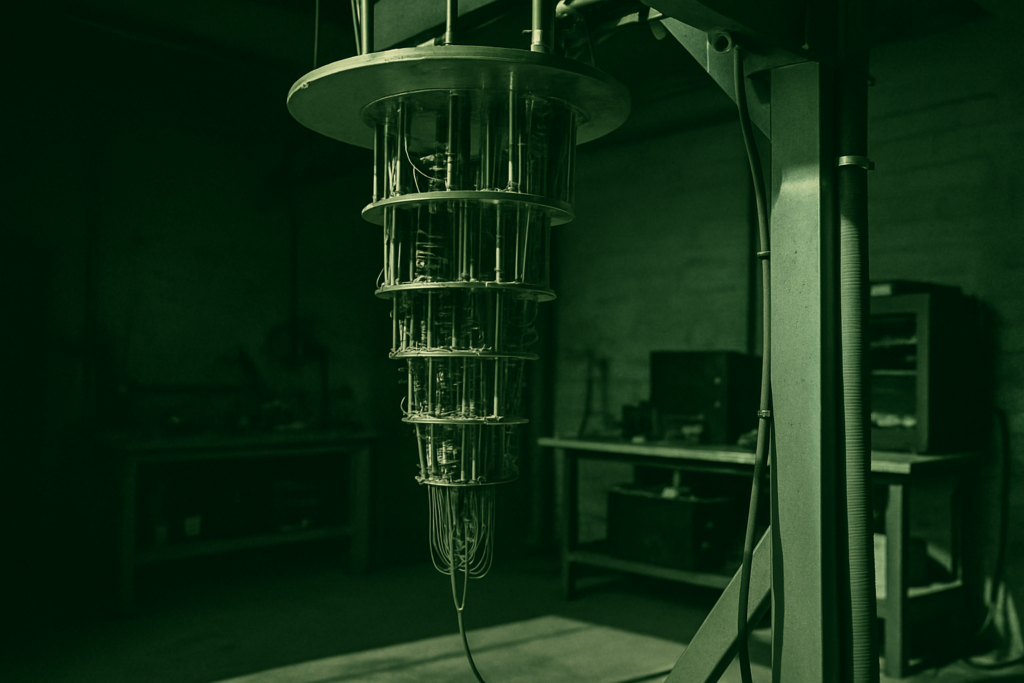
What Quantum Computing Actually Is
Classical computers deal in bits one or zero, on or off. They crunch data sequentially, one decision at a time. It’s reliable, familiar, and the backbone of everything from spreadsheets to space missions. But some problems like simulating molecules, cracking ultra secure codes, or optimizing massive networks are too complex for this step by step approach.
Quantum computers flip the script. Instead of bits, they run on qubits. A qubit can be a one, a zero, or both at once this is superposition. Now multiply that by entanglement, where the state of one qubit is linked to another no matter the distance, and you’ve got a system that can explore a huge number of possibilities in parallel. This isn’t just faster it’s a totally different way of computing.
Why does this matter? Because with enough stable qubits and the right error correction, quantum systems could eventually solve problems traditional computers wouldn’t touch in a millennium. From drug discovery to logistics to cryptography, quantum isn’t just a tech upgrade it’s a shift in how we understand and work with data, systems, and scale.
Why It’s Getting Traction Now
Quantum computing isn’t just hype anymore it’s attracting serious money. Google, IBM, Microsoft, and Amazon are investing billions into labs, infrastructure, and proprietary research. Their goal? To move quantum systems out of the lab and into the real world, where they can solve problems classical machines can’t touch. This level of private sector commitment is turning quantum into more than a research race it’s becoming a commercial arms race.
Hardware is evolving fast, too. Early quantum machines were fragile and unpredictable. Today’s models are more stable, scalable, and getting closer to real world usability. Companies like Rigetti and IonQ are pushing qubit counts higher while working on reducing error rates a big deal for any practical application.
It’s not just tech giants in the mix. Governments around the world are building national strategies around quantum. From the U.S. National Quantum Initiative to EU wide coalitions, public funding is flowing into advanced research. Universities and national labs are doubling down, creating new talent pipelines and open source projects to speed progress.
Put simply: momentum is no longer a question. The ingredients capital, hardware, and institutional backing are all here. Now it’s about execution.
Real World Use Cases Already Making Waves
Quantum computing isn’t just lab talk anymore it’s starting to make a dent in some major sectors.
First up, drug discovery. Traditional simulations of molecular structures are slow and approximate. Quantum computers, with their ability to process massive combinations in parallel, can simulate molecules at the atomic level. That means faster identification of potential drug candidates and better prediction of how they behave. Early trials using quantum simulations have already shown potential in streamlining R&D for diseases ranging from Alzheimer’s to antibiotic resistance.
Then there’s cryptography. Quantum machines crack problems that would take today’s supercomputers millions of years. That’s great for progress not so great for our current encryption. Quantum computing could render today’s RSA based systems obsolete. The industry is scrambling to build quantum resistant protocols, but it’s a race against the clock.
In finance, quantum tech is pushing into optimization and forecasting. Managing risk and building portfolios involves chewing through mountains of variables and constraints. Quantum algorithms can explore these options more efficiently, aiding in everything from trading strategies to fraud detection. Big firms are partnering with quantum startups to test pilot projects quietly, but aggressively.
This isn’t hypothetical anymore. It’s the groundwork for a shift that will touch medicine, security, and global money systems. And we’re only in the early innings.
Tracking the Fastest Growing Areas in Quantum

Quantum is no longer only for the lab. It’s starting to hit the market and fast. Commercial quantum as a service (QaaS) offerings are making this specialized capability accessible to companies without quantum physicists on payroll. IBM, Rigetti, and other key players are rolling out cloud based quantum platforms where clients can run experiments and simulate problems… all without having to own a quantum machine. It’s early, but it’s real.
Hybrid computing is also gaining traction mixing classical and quantum processing for a best of both worlds approach. Quantum handles the complex calculations it’s built for; conventional machines do the rest. This model makes quantum more practical in fields like logistics, where problems have both hard math and everyday variables.
Then there’s quantum machine learning (QML) a field that’s still forming but full of promise. Think faster pattern recognition, smarter AI models, and potentially a game changer for big data.
It’s still early innings, but these advancements are shaping how industries from pharma to finance will build, solve, and scale in the future.
For deeper insights, check out quantum tech trends.
Major Roadblocks to Mass Adoption
Quantum computing has promise, but it’s still climbing a steep hill. First, the hardware just isn’t ready for prime time. Qubits are absurdly fragile tiny environmental changes can throw off calculations, which is why error correction isn’t just helpful, it’s essential. But here’s the catch: adding error correction means adding even more qubits. Right now, scaling up without making the whole system uselessly unstable is a major bottleneck.
Then there’s the issue of tools. Quantum developers don’t have the luxury of mature, standardized software stacks like classical devs do. The landscape is fragmented. One system uses one set of principles, another uses something totally different. This throws a wrench into collaboration, learning, and long term innovation.
And finally: talent. Quantum isn’t just hard to learn it’s brutally complex. Most people who can design or work on quantum systems have PhDs in physics, computer science, or both. The pipeline for new talent is small and slow, and companies are fighting for the same handful of experts. Until the learning curve flattens and dev tools catch up, mass adoption stays on the horizon not around the corner.
Looking Ahead: What This Decade Could Bring
It’s no longer a question of if quantum computing will make an impact it’s when, and how fast. Real world applications are starting to come into focus, especially in logistics and materials science. Companies are eyeing quantum systems to streamline routes, minimize waste, and model complex supply chains far beyond what traditional software can handle. In materials science, the ability to simulate atomic interactions could fast track the discovery of stronger, lighter, or more sustainable materials. For manufacturers and energy sectors, that’s a big deal.
But quantum’s rise brings more than innovation it brings risk. National security agencies are watching closely. The potential to crack today’s encryption methods means governments need to think not just about using quantum tech, but defending against it. Post quantum cryptography isn’t optional. It’s already underway.
Ethics can’t be an afterthought either. Like AI, quantum will raise hard questions about data sovereignty, who controls the tech, and how it’s deployed. These conversations need to happen now, not after the fact.
At the heart of all this is the race to quantum advantage when quantum systems can solve problems no classical computer can. We’re not there yet, but we’re closer than we’ve ever been. The next few years will separate hype from utility.
Explore more on what’s driving innovation: quantum tech trends